Get my free quote
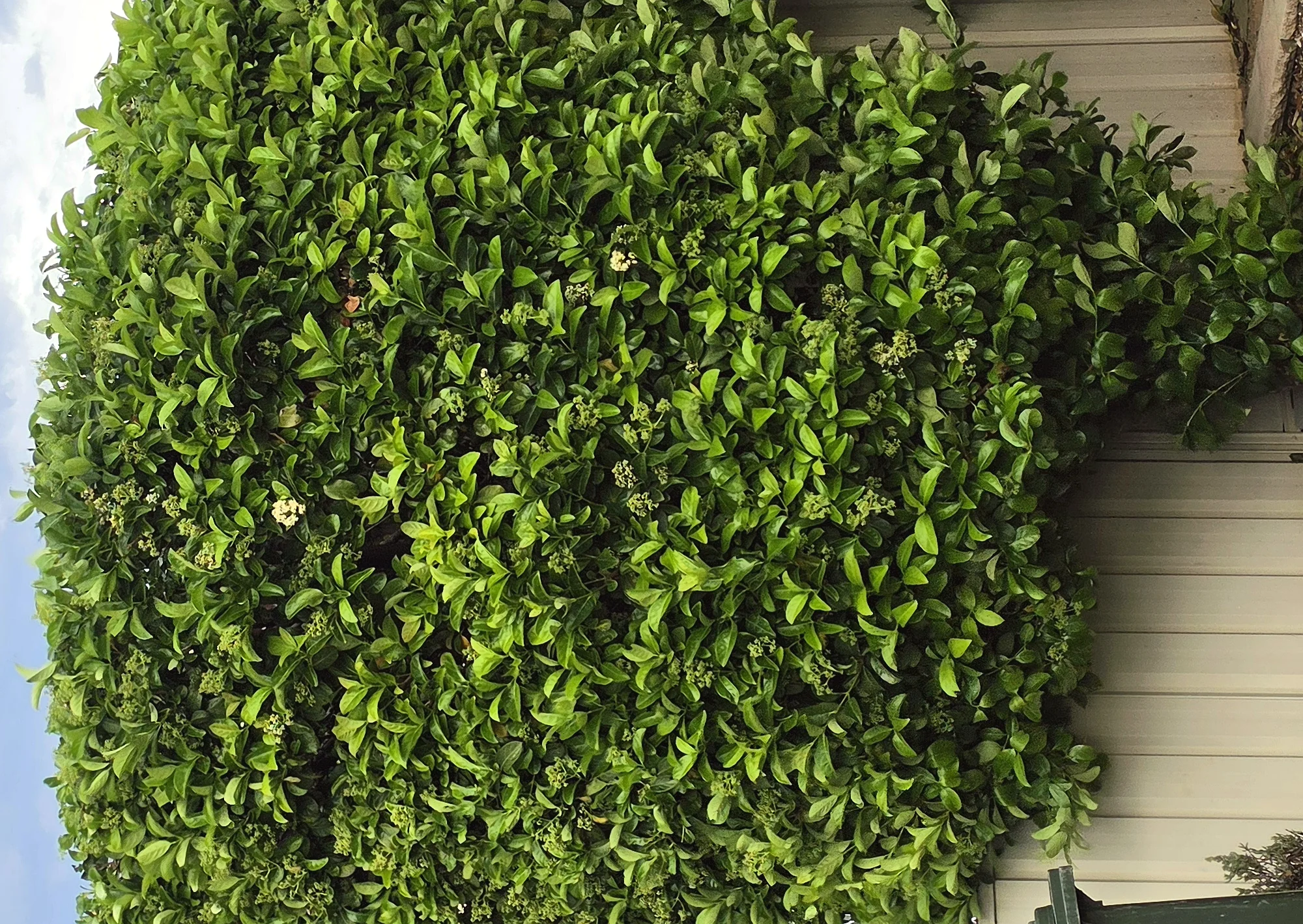
Tall sweet viburnum privacy hedge along a Sutherland Shire fence line

HOW-TO GUIDES

How to trim and care for a sweet viburnum hedge

Viburnum odoratissimum

Back to all guidesGet my free quote

Sweet viburnum is one of the best plants for a tall privacy hedge in the Sutherland Shire. It grows fast, has big glossy leaves and fills out quickly along fence lines. Because it gets tall, regular trimming is key to keeping it dense and under control. This guide covers how to trim a sweet viburnum hedge, when to prune it and how to fix common leaf problems.

Quick facts

  • Growth rate: fast
  • Trim: two to three times a year
  • Hard prune: yes, it recovers well
  • Best time to trim: after spring flowering, then summer and early autumn
  • Watch for: silvery or mottled leaves (thrips), sooty mould and yellowing in wet soil

How to trim a sweet viburnum hedge

  1. Do the first trim after it flowers in spring. You’ll keep the fragrant white flowers and shape the hedge for the growing season.
  2. Keep the top slightly narrower than the base. This matters more on tall hedges, because it lets light reach the bottom branches so the hedge doesn’t go bare at the base.
  3. Use a hedge trimmer for the main shape. Sweet viburnum is big and fast, so a trimmer is the practical choice. For a neater finish, tidy any badly cut leaves with secateurs.
  4. Use a stable platform for tall hedges. Never overreach from a ladder. For hedges above head height, it’s often safer to call in help.
  5. Clear out the clippings. The large leaves can mat together and trap moisture at the base.

When to prune sweet viburnum in Sydney

In the Sutherland Shire, sweet viburnum flowers in spring and grows strongly through summer. Give it a first trim once flowering finishes, a second in summer and a final tidy in early autumn. Avoid heavy pruning late in autumn, so new growth has time to firm up before winter.

Can you hard prune sweet viburnum?

Yes. Sweet viburnum handles a hard prune well, which is handy when a privacy hedge has grown too tall or wide. The best time is late winter to early spring, before the main flush of growth. It will look bare for a while but usually fills back in within a season. For very large hedges, reduce the height first and the width the following season.

Why are my viburnum leaves silvery, yellow or black?

  • Silvery, mottled or bronzed leaves: usually thrips, tiny insects that feed on the leaves. Trim off the worst-affected growth and keep the hedge well watered, as stressed plants are hit harder.
  • Black, sooty leaves: sooty mould growing on sticky residue left by aphids or scale. Treat the insects and the mould will clear over time.
  • Yellowing leaves: often from waterlogged soil or a lack of nutrients. Check drainage and feed in spring.
  • Brown, crispy edges: a sign of drought stress or hot, dry winds. Water deeply in dry spells.

Feeding and watering

Feed sweet viburnum with a slow-release fertiliser in spring to support its fast growth. Water deeply during long dry spells, especially young hedges, and mulch around the base to keep the roots cool and moist. Established hedges are fairly tough once their roots are settled.

Sweet viburnum hedge FAQs

How fast does sweet viburnum grow?

Fast. It’s one of the quickest ways to get a tall privacy hedge in the Shire.

How tall can a sweet viburnum hedge get?

It’s usually kept at about two to four metres as a hedge, but it can grow much taller if left untrimmed.

How often should I trim sweet viburnum?

Two to three times a year, starting after spring flowering.

Is sweet viburnum good for privacy?

Yes. Its large, dense leaves make it one of the best screening plants for fence lines and boundaries.

Need a hand with your viburnum?

Tall hedges are hard work and can be risky on a ladder. If your sweet viburnum has grown too tall or wide, Louie’s can bring it back under control. Local, reliable hedge trimming across the Sutherland Shire.

Get my free quote